
Which Hydraulic Fluids Work for Hydraulic Press Machines?Update:2025-09-29 Hits:730
Which Hydraulic Fluids Work for Hydraulic Press Machines? A Complete GuideHydraulic press machines rely on hydraulic fluids as more than just a power-transfer medium—these fluids lubricate components, dissipate heat, and protect against wear, directly impacting the machine's performance, longevity, and safety. Choosing the right fluid requires matching its formulation and specs to your press's operating conditions, load demands, and environmental constraints. Below is a breakdown of the most effective hydraulic fluids for hydraulic press machines, their key specifications, and how to select the best option.
Key Roles of Hydraulic Fluid in Hydraulic Press Machines
Before diving into fluid types, it’s critical to understand why fluid choice matters for your press:
● Power transmission: Transfers force evenly across the system to drive pressing, forging, or molding operations.
● Component protection: Reduces friction between pistons, pumps, and valves to prevent premature wear.
● Temperature regulation: Cools heat-generating parts during high-pressure cycles.
● Contaminant control: Suspends particles to avoid clogging precision components.
A mismatched fluid can lead to sluggish operation, leaks, component failure, or even safety hazards like fires in high-heat environments.
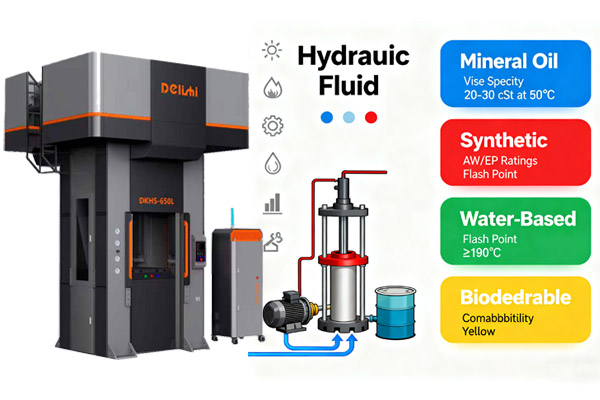
Common Hydraulic Fluid Types for Hydraulic Press Machines
Four primary fluid categories work for hydraulic press machines, each optimized for specific use cases. The table below compares their core traits, ideal applications, and tradeoffs:
| Fluid Type | Core Properties | Best For Hydraulic Press Applications | Pros & Cons |
| Mineral Oil-Based | Refined crude oil with anti-oxidant, anti-wear, and anti-rust additives. | General-purpose presses (metal stamping, assembly) operating at 0–45°C and medium pressure. | √ Cost-effective, stable lubrication, wide compatibility × Flammable, poor extreme-temperature performance |
| Synthetic | Engineered esters/polyalphaolefins (PAOs) with high viscosity stability. | High-pressure (≥3000 psi) or high-temperature (45–100°C) presses (forging, die casting). | √ Resists oxidation/thermal breakdown, long service life × Higher cost, limited compatibility with some seals |
| Water-Based | Water-glycol or high-water-content (HFA) formulations. | Presses near heat sources/open flames (steel mills, foundries). | √ Non-flammable, low environmental impact × Poor lubricity, risk of corrosion/microbial growth |
| Biodegradable | Plant-based esters or synthetic biodegradable base oils. | Outdoor/eco-sensitive presses (marine forging, forestry equipment). | √ Spill-safe, meets environmental regulations × Frequent replacement needed, higher cost |
Critical Specifications to Match Your Hydraulic Press
Beyond fluid type, specifications determine compatibility with your press’s design and operating conditions. Prioritize these key metrics:
1. Viscosity
Viscosity (fluid thickness) is the most important spec for hydraulic press machines—it affects flow rate, lubrication, and energy efficiency .
● Optimal range: 20–30 cSt at 50°C (standard operating temperature for presses).
● Risks of mismatch:
○ Too low (≤15 cSt): Leaks around seals, inadequate lubrication, and increased pump wear .
○ Too high (≥35 cSt): Sluggish press movement, higher energy consumption, and poor heat dissipation.
● Example: A four-column hydraulic press operating at 0–45°C typically uses 46# or 68# anti-wear hydraulic oil—68# oil has a kinematic viscosity of 61.2–74.8 mm²/s at 40°C, translating to ~25 cSt at 50°C.
2. Anti-Wear (AW) and Extreme Pressure (EP) Ratings
Hydraulic presses exert intense force on components like pistons and valves, so fluids need robust wear protection:
● Look for AW additives (zinc-based compounds) for medium-pressure presses (1000–3000 psi).
● For high-pressure presses (>3000 psi, e.g., metal extrusion presses), choose fluids with EP additives to withstand boundary lubrication conditions.
● Example: L-HL68 anti-oxidant rust hydraulic oil includes EP additives, making it suitable for high-pressure metal cast presses .
3. Thermal and Oxidative Stability
High-pressure cycles generate heat, so fluids must resist breakdown:
● Flash point: Minimum 190°C for safety (avoids ignition in warm presses).
● Viscosity index (VI): ≥80 for consistent performance across temperature swings . Synthetic fluids often have VI ≥140, ideal for outdoor presses.
4. Compatibility
Ensure the fluid works with your press’s materials:
● Seals: Mineral oils pair with nitrile seals; synthetics require Viton seals .
● Metals: Avoid water-based fluids with uncoated steel (risk of rust) unless they include anti-corrosion additives
Step-by-Step Guide to Choosing the Right Fluid
1. Check the manufacturer's manual: Most press makers specify fluid type (e.g., “46# anti-wear mineral oil”) and viscosity range.
2. Assess operating conditions:
○ Temperature: Use synthetics for <0°C or >45°C; mineral oil for 0–45°C .
○ Pressure: EP-additive fluids for >3000 psi; standard AW fluids for lower pressure.
○ Environment: Water-based for fire risks; biodegradable for eco-sensitive areas.
3. Verify specs: Cross-check viscosity (20–30 cSt at 50°C), flash point, and compatibility with seals/metals.
4. Prioritize cleanliness: Choose filtered fluids (<100 ppm contaminants) and use in-line filters to extend fluid life.
Final Recommendations by Press Type
| Hydraulic Press Application | Recommended Fluid Type | Key Specs Example |
| General metal stamping | Mineral oil (AW 46#) | Viscosity: 41–50 cSt at 40°C, VI ≥80 |
| High-temperature forging | Synthetic ester (HFD-U) | Flash point ≥200°C, VI ≥140 |
| Foundry presses (fire risk) | Water-glycol (HFC) | Non-flammable, anti-corrosion additives |
| Outdoor metal pressing | Biodegradable vegetable ester | Biodegradability ≥90%, viscosity 25 cSt at 50°C |
The right hydraulic fluid turns a hydraulic press machine from a tool into a reliable asset. By aligning fluid type and specs with your press’s needs—and maintaining fluid quality—you’ll minimize downtime, extend component life, and ensure consistent performance. Always reference your machine’s manual first, and when in doubt, consult a fluid specialist for high-pressure or specialized presses.
News
- Hydraulic Press Machines Engineered for Precision & Heavy-Duty Manufacturing2026-09-28
- Hydraulic Press Manufacturer: Precision-Engineered, Automated Solutions2026-09-21
- Hydraulic Press Industry Trends 2026: Automation, Energy Efficiency & Smart Manufacturing2026-09-14
- Custom vs. Standard Hydraulic Presses: Which Is Right for Your Production?2026-09-09
