
The Importance of Hydraulic Press Machines in Modern ManufacturingUpdate:2025-11-10 Hits:252
Hydraulic press machines play a vital role in modern manufacturing, which is manifested in their ability to generate high force precisely, their wide - ranging versatility, high energy efficiency, and more.From the car you drive and the airplane you fly in to the smartphone in your pocket and the appliances in your home, hydraulic presses have played a critical role in their creation.
What is a Hydraulic Press Machine?
At its core, a hydraulic press is a machine that uses a hydraulic cylinder to generate a compressive force. It operates on Pascal's Principle: pressure applied to a confined fluid is transmitted undiminished in all directions. This allows a relatively small force applied to a small piston to create a massive force on a much larger piston.
In simple terms, it uses hydraulic fluid to amplify force, enabling it to bend, mold, punch, or crush materials that would be impossible to handle with manual or less powerful machinery.
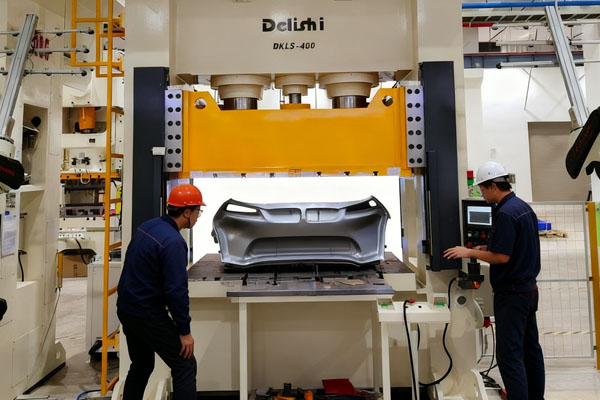
Key Advantages: Why Hydraulic Presses Remain Crucial
1. Unmatched Power and Force
Hydraulic presses are capable of generating immense amounts of force—from a few tons to tens of thousands of tons. This makes them uniquely suited for heavy-duty forming operations like forging, stamping, and molding dense materials such as steel, titanium, and composites. No other press type can deliver this level of raw power as consistently.
2. Full Tonnage Throughout the Stroke
Unlike mechanical presses, which only deliver full power at the bottom of the stroke, hydraulic presses can deliver their full rated force at any point in the stroke. This provides superior control for deep draws and complex forming operations where consistent pressure is required throughout the entire process.
3. Precision Control and Flexibility
Modern hydraulic presses are a far cry from their brute-force ancestors. With advanced programmable logic controllers (PLCs) and servo-hydraulic systems, operators can precisely control:
● Pressure
● Stroke Length
● Speed (approach, pressing, and return)
● Dwell Time
This programmability makes them incredibly versatile and ideal for high-precision tasks in industries like aerospace and medical device manufacturing.
4. Inherent Overload Protection
The hydraulic system itself acts as a safety buffer. If the press encounters an unexpected overload (e.g., a misaligned part), the relief valve will open, preventing damage to the machine, the tooling, or the part. This built-in protection reduces downtime and repair costs.
5. Versatility and Adaptability
A single hydraulic press frame can often be adapted for a wide range of tasks simply by changing the tooling (dies). The same press might be used for punching, blanking, deep drawing, and assembly operations, making it a highly cost-effective asset for job shops and high-mix production environments.
Critical Applications Across Industries
The versatility and power of hydraulic presses make them essential in nearly every sector of manufacturing:
● Automotive & Aerospace: Forging crankshafts and landing gear, stamping body panels, molding composite parts, and laminating interior panels.
● Appliances: Forming metal housings for washers, dryers, and refrigerators.
● Electronics: Laminating touchscreens, compacting powdered metal for components, and embedding circuits.
● Construction & Agriculture: Manufacturing heavy-duty I-beams, brackets, and equipment parts through metal forming and forging.
● Pharmaceuticals: Compressing powder into tablets with extreme precision and consistency.
● Recycling: Compacting scrap metal, cars, and waste materials for efficient transport and processing.
Hydraulic Press Machines in the Era of Industry 4.0
The modern hydraulic press is not an isolated machine, it's an integrated part of the smart factory. They are now equipped with:
● IoT Sensors: Monitoring pressure, temperature, and cycle times in real-time.
● Data Collection: Feeding performance data to central systems for predictive maintenance and process optimization.
● Automation Compatibility: Easily integrated with robotic part loaders/unloaders and conveyor systems for seamless production lines.
This connectivity minimizes unplanned downtime, improves quality control, and maximizes overall equipment effectiveness (OEE).
Conclusion: A Lasting Legacy of Power and Precision
While manufacturing technologies will continue to advance, the fundamental need to shape and form strong, durable materials will remain. Hydraulic press machines, with their unparalleled combination of raw power, precise control, and remarkable versatility, are perfectly poised to meet this need.
They are the silent, powerful workhorses of industry—the indispensable force that continues to press, mold, and forge the very foundation of our modern world.
News
- Hydraulic Press Machines Engineered for Precision & Heavy-Duty Manufacturing2026-09-28
- Hydraulic Press Manufacturer: Precision-Engineered, Automated Solutions2026-09-21
- Hydraulic Press Industry Trends 2026: Automation, Energy Efficiency & Smart Manufacturing2026-09-14
- Custom vs. Standard Hydraulic Presses: Which Is Right for Your Production?2026-09-09
