
Hydraulic Press Machine: High-Pressure Solutions for Metal Forming & MoreUpdate:2025-07-15 Hits:338
The hydraulic press machine is a powerful industrial tool that uses hydraulic pressure to generate compressive force, making it essential for metal forming, forging, stamping, and other manufacturing processes. Known for their efficiency, precision, and versatility, hydraulic presses are widely used in industries such as automotive, aerospace, construction, and metalworking.Following we'll explores the working principles, types, applications, and advantages of hydraulic press machines, highlighting why they remain a cornerstone of modern manufacturing.
How Hydraulic Press Machines Work
Hydraulic presses operate based on Pascal’s Law, which states that pressure applied to a confined fluid is transmitted equally in all directions. The key components of a hydraulic press include:
1. Hydraulic Pump – Generates fluid pressure.
2. Hydraulic Cylinder – Converts fluid pressure into mechanical force.
3. Control Valves – Regulate the flow and direction of hydraulic fluid.
4. Press Frame – Provides structural support.
5. Platen or Die – The surface where the workpiece is placed.
When hydraulic fluid is pumped into the cylinder, it pushes a piston, creating immense force that compresses or shapes the material. The pressure can be precisely controlled, allowing for high repeatability in industrial applications.
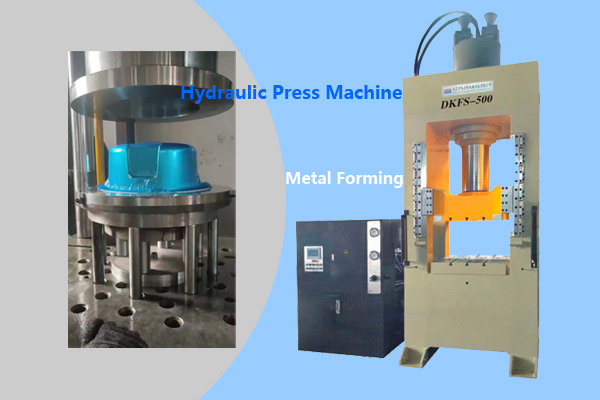
Types of Hydraulic Press Machines
Hydraulic presses come in various configurations, each suited for specific tasks:
1. H-Frame Hydraulic Press
Features an H-shaped frame for stability.
Ideal for repair shops, assembly, and straightening operations.
2. C-Frame Hydraulic Press
Compact design with a C-shaped frame for easy access.
Used for stamping, bending, and light assembly tasks.
3. Four-Column Hydraulic Press
Four vertical columns ensure high stability and uniform pressure distribution.
Common in heavy-duty forging and deep drawing applications.
4. Bench-Top Hydraulic Press
Smaller, portable presses for laboratory testing and small-scale production.
5. Custom Hydraulic Presses
Tailored for specialized operations like powder compacting, laminating, or rubber molding.
Key Applications of Hydraulic Press Machines
Hydraulic presses are indispensable in various industries due to their ability to handle high-force operations with precision.
1. Metal Forming & Stamping
Used in automotive manufacturing for shaping car body panels.
Sheet metal stamping for appliances and machinery parts.
2. Forging & Extrusion
Produces high-strength components like gears, shafts, and aircraft parts.
3. Powder Compacting
Compresses metal or ceramic powders into solid parts (e.g., bearings, bushings).
4. Molding & Laminating
Used in plastic molding, plywood production, and composite material forming.
5. Scrap Briquetting
Compresses metal scraps into compact briquettes for recycling.
Advantages of Hydraulic Press Machines
Compared to mechanical presses, hydraulic presses offer several benefits:
✅ High Force Capacity – Can generate hundreds to thousands of tons of pressure.
✅ Precision Control – Adjustable pressure and stroke length for consistent results.
✅ Versatility – Suitable for multiple operations (punching, bending, deep drawing).
✅ Overload Protection – Hydraulic systems prevent damage by releasing excess pressure.
✅ Quieter Operation – Produces less noise than mechanical presses.
Conclusion
Hydraulic press machines are a critical component in modern manufacturing, offering unmatched power, precision, and adaptability. From metal forming and forging to recycling and molding, these machines provide high-pressure solutions that enhance productivity and efficiency across industries.
As technology advances, hydraulic presses continue to evolve with automation and smart control systems, ensuring they remain at the forefront of industrial innovation.
News
- Hydraulic Press Machines Engineered for Precision & Heavy-Duty Manufacturing2026-09-28
- Hydraulic Press Manufacturer: Precision-Engineered, Automated Solutions2026-09-21
- Hydraulic Press Industry Trends 2026: Automation, Energy Efficiency & Smart Manufacturing2026-09-14
- Custom vs. Standard Hydraulic Presses: Which Is Right for Your Production?2026-09-09
